Going In Reverse
I’ll say it again, to write again something that cannot be said enough…
We ought not to pride ourselves in
possessing carriages and coronets
or because of difficulties and poverty
resort to crude means.
Who among us doesn’t feel a flush of pride to own a new vehicle, especially one which is widely admired by neighbors and townspeople? Many guys very much desire to own a GMC Denali truck with leather appointed seats, even massage-seats…
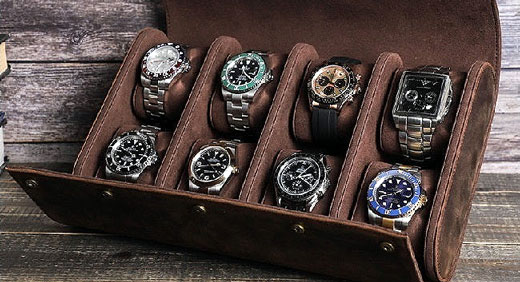
Coronets refer to small crowns worn by minor nobility, the Dukes and Earls. Wouldn’t you like to own a Rolex or a Breitling watch? Would you expect those timepieces to keep better time than say the Apple Smartwatch? No you wouldn’t. But that would be beside the point!
Admonishing, to caution against the pride felt with ownership of fine possessions, those designed to symbolize status, stands to be as successful as advising one standing on the edge of the observation deck of the Grand Canyon not to feel a rush of adrenaline…
Nevertheless awareness is better than ignorance of our dilemma!
Then
our happiness is the same
in good fortune
or in misfortune
and
we are free
from care.
Wouldn’t you desire to be free from care? I would.
If the parting of what is fleeting
takes away our happiness,
it reveals
how even in the midst
of happiness
we are restless.
Examples of individuals favored by one of many forms of good fortune are many. Aristocrats of wealth and title sometimes love the limelight. More often than not fame, and wealth do not obscure the restlessness that is their constant companion.
It is said,
“Those who lose themselves
in the pursuit of things
and stray from their innate nature
are people who
reverse the order
of things.
The verse is a consideration of the tao-view: of a natural thread, an order-of-things which is a component of all things, of even the energy exchanges, fluctuating between atoms which biologists recognize compose a protein molecule… Or of our Milky Way galaxy.
A person, any person, demanding possession, ownership — aspires to reverse “the order of things.”
Zhuangzi, trans. by Hyunn Höchsmann and Yang Guorong, Book 16





2 thoughts on “Going In Reverse”
The concept of owning anything is delusional at best, for are we not all ephemeral in nature? We are born and we die. The tangible items that pass through our hands have no concept of time, no sense of existence. They are what they are and when their time comes to diminish into dust or ash, that is what they will do without remorse, without feeling, without ever understand that some members of a mammalian species “owned” it.
What a silly group of animals we are, pretending we have a possession of an item. Take the island of what we call Greenland. As if a narciccistic moron could truly own this piece of land. It is a part of the Earth.
Now, he (or any other insane power monger) could indeed wreck havoc and do major damage to the landscape by digging up minerals and sucking the land dry of fossil fuels, but that too is only temporary in the long run. And yet perhaps this is his only goal: to leave behind a foul stench of corruption and greed that will live long past the decomposition of his mortal body. Perhaps what keeps him going is the knowledge that the destruction he sows during his final few days on this planet will exist well beyond his death. A legacy of sorts. Perhaps he believes that if he can’t be physically immortal, then the rest of us and our descendants can at least wallow in the filth we have inherited from this creature.
If one has never developed skills of empathy, of producing work meaningful and beautiful- then one destroys like a god.