If We Could See
I have enjoyed taking photographs since I was a sophomore in high school. I borrowed my fathers box camera, (shutter speed of 1/30 th second) which I used to capture black-and-white photos of the racing action at a North Carolina drag strip. I have owed many cameras since. Photography and images endure as important in my life.
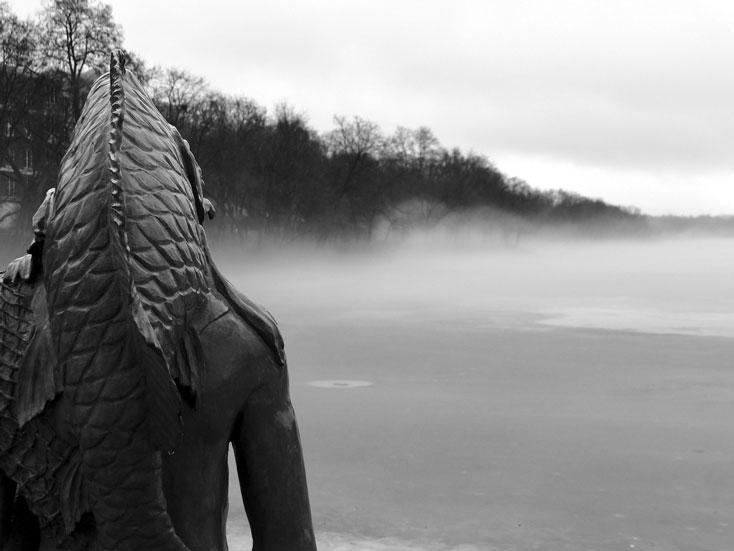
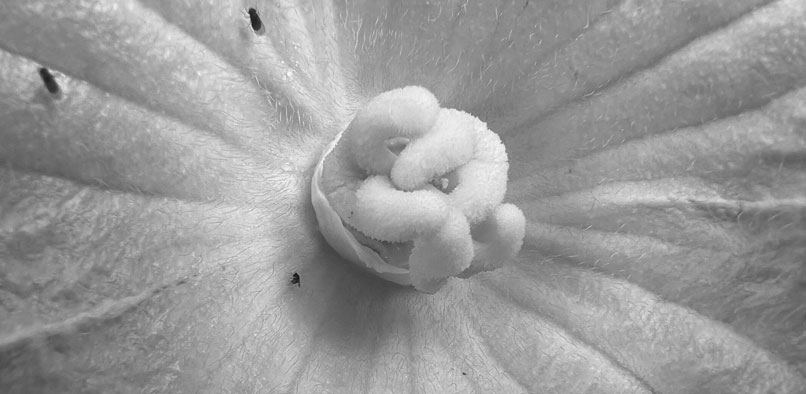
I am reading a slim volume by Vilém Flusser advancing a philosophy of photography. I offer several paragraphs at the beginning of the chapter entitled: The Photograph. The images are photos which I captured in 2025.
Thus far, reflection has suggested the thesis…
that these images (photographic) signify concepts in a program
and that they program society to act as though
under a secondary magic spell.
However, for people who look at photographs naïvely
they signify something different, i.e. states of things
that have been reflected onto surfaces. For these people,
photographs represent the world itself. Admittedly, such naïve
observers will concede that the states of things are
reflected onto surfaces from specific points of view but
they won’t worry too much about that. Any philosophy of photography
will therefore seem to them a complete waste of mental energy.
Such observers tacitly accept that they are looking
through the photographs at the world out there and that
therefore the photographic universe and the world out there
are one and the same (which still amounts to a rudimentary philosophy
of photography). But is this the case?
The naïve observer sees that in the photographic universe one is faced
with both black-and-white and colored states of things. But are there
any such black-and-white and colored states of things in the world out there?
As soon as naïve observers ask this question, they are embarking
on the very philosophy of photography that they were
trying to avoid.
There cannot be black-and-white states of things in the world
because black and white cases are borderline, ‘ideal cases’: black
is the total absence of all oscillations contained in light, white
the total presence of all the elements of oscillation.
‘Black’ and ‘white’ are concepts, e.g. theoretical concepts of optics.
As black-and-white states of things are theoretical, they can
never actually exist in the world.
But black-and-white photographs do actually exist
because they are images of concepts belonging to a theory of optics,
i.e. they arise out of this theory.
Black and white do not exist, but they ought to exist since,
if we could see the world in black and white,
it would be accessible to logical analysis.
Towards A Philosophy Of Photography by Vilém Flusser, p. 42