Tattered, Decrepit, Spent
Every concept arises from the equation of unequal things.
Just as it is certain that one leaf
is never totally the same as another,
so it is certain that the concept “leaf ”
is formed
by arbitrarily discarding
these individual differences and
by forgetting the distinguishing aspects.
This awakens the idea
that, in addition to the leaves,
there exists in nature the “leaf ”:
the original model according to which
all the leaves were perhaps woven,
sketched, measured, colored, curled, and painted
– but by incompetent hands,
so that no specimen has turned out
to be a correct, trustworthy,
and faithful likeness
of the original model.
We call a person “honest,”
and then we ask “why has he behaved so honestly today?”
Our usual answer is, “on account of
his honesty.”
Honesty!
…we formulate
from them (unequal things)
a qualitas occultas* which has the
name “honesty.”
*Latin for “supernatural quality”
A good friend read yesterday’s post. His response by text was a WTF. He admitted to not care about abstruse philosophy. Those words didn’t matter to him. He cares very much though about “a good song, a well designed building or a beautiful car”. On one level I had to agree. Appreciation is surely the entire point. Life well lived is a matter of felt satisfaction with the three elements mentioned, and more of course. Philosophy is the effort to “pop the hood” to admire and understand more clearly how things can be so well designed and so beautiful, and also, how systems, ways of thinking, of behaving are grotesque, so fucked up.
The quoted lines above invite us to consider what is necessary to form a language, any language. If you want to communicate with me about “leaves” both of us will inevitably discard the delicate beauty and unique form of every leaf in favor of an averaging of all leaves into a unitary sound label: leaf! Perhaps you can intuit the violent action necessary, the falsification needed for language… Words, for example the adjective, honest/honesty take on a quasi-divine imperative. Meaning ordained from “above” — since we’ve severed a link with external, earthly reality.
What then is truth?
A movable host of metaphors, metonymies, and anthropomorphisms:
in short, a sum of human relations
which have been poetically and rhetorically
intensified, transferred, and embellished,
and which, after long usage,
seem to a people
to be fixed,
canonical,
and binding.
Truths are illusions
which we have forgotten are illusions;
they are metaphors that have become worn out
and have been drained of sensuous force,
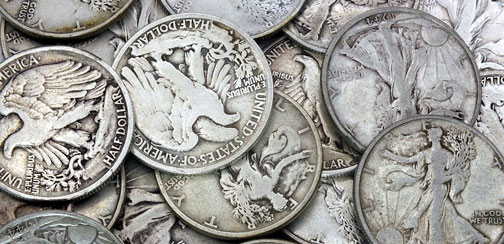
coins
which have lost their embossing
and are now considered
as metal
and no longer as coins.
On Truth and Lies in a Nonmoral Sense by Friedrich Nietzsche, 1873