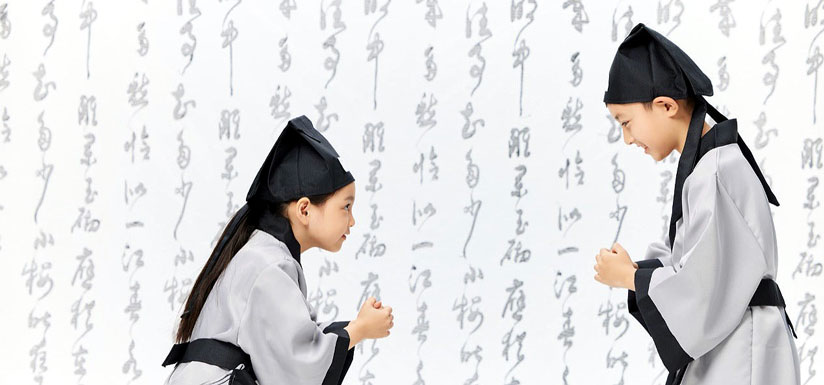
Strolling To Gather The True
The highest men of the ancient days
traversed the virtue of benevolence as a path;
They borrowed and dwelled in righteousness
as a lodging for the night.
They ambled in the empty space of Unruffled Repose,
found nourishment in the Field Free of Longing
and stood in the Garden Free of Possession.
Unruffled Repose requires non-action.
one is easily nourished in the Field Free of Longing.
The Garden Free of Possession requires no outlay.
The ancients called this
the Stroll to Gather the True.
Those who hold wealth as their life
cannot give up their revenues.
Those who seek recognition
cannot give up fame.
Those who crave power
cannot yield to others.
While they possess these, they are afraid of losing them.
When they must let them go,
they are desperate and will not reflect
on the futility of their restless pursuits.Such men are under the doom of heaven.
Zhuangzi by Zhuang Zhou, trans. Hyun Höchmann and Yang Guorong, The Revolution of Heaven
“Benevolence (Ren 仁) and Righteousness (Yi 義)” the two guiding principles of Confucianism are the foundation which underlays the culture of China. The impression that comes, this amounts to a rule-based notion of correct behavior in reference to the social class of one’s contemporaries. The Taoist author refers to “Benevolence and Righteousness” as a rest stop for a single night, a mere way station on a journey in search of the ideal comportment for one’s life.
The quoted passage reminds me of an ongoing dialog with a friend about the idea of “truth.” Truth, -insight of the deepest levels of human nature, indeed of all of nature. According to the Taoist approach “truth” amounts to receipt of the flowing dynamic that underlies all things. The condition of mind, of soul is described as ambling, as discovery-of-nourishment, as standing free, as a repose.
These painterly descriptors impress as disciplined receptivity to the “thusness” of experience. The author attempts a summation by writing that the ancestors called the existential state “strolling to gather the true’.
To drive home the recommended style of relationship to truth Zhuang Zhou details an antithesis to a truth oriented manner of life.
Who would not recognize the various expressions this darkened attitude and lifestyle take all around us?





6 thoughts on “Strolling To Gather The True”
With regard to your post and our myriad discussions on this topic, I still want to believe that the foundation, the very bedrock, of existence is supported by universal and irrefutable truth and that we just can’t see it because of our subjective nature. For a brief moment, let us say that some kind of god exists and the he/she gave us both the capacity to understand that truth exists, but also the subjectivity to never be able to find it. This would be a very cruel practical joke to play on a creature that you just created.
That is quite a thought experiment! The setup is predicated upon a powerful creator-force…
The thought experiment to which I am inclined predicates a relational logic that is inscribed into every dimension of existence. We cannot encompass the bedrock of existence only because we are a component, inside of the experiment, with no possibility of an outside vantage point. No joke here…
That, my friend, is the inescapable subjective nature of our species.
Subjectivity seems a limit, only should there exist an absolute truth, a final take “upon the way things are.”
But if there isn’t, only an emptiness, the womb and destination of all things, then – how marvelous it is to gasp at moon rise, behind the clouds at dusk (like a goddess) or a long line of geese high in the blue sky heading for a distant lake, which one, only they are sure. Are other mammals gobsmacked in their own way? I know that our species sometimes is…
Interesting. I’m beginning to understand that we are, once again, defining “truth” in very different ways. “Beauty is in the eye of the beholder,” as the ancient phrase tells us. To some, truth may be equated to beauty and I will not argue against that. Yet that is not a universal and irrefutable definition. In that context a truth that inspires awe is as meandering as the wind and as ethereal as gossamer, to wax poetic. Yes, you and I and thousands of others may “feel” we have found truth in the poetry of Wendell Berry, but again, that is not the truth that will remain elusive for as long as mankind exists. This I know with absolute certainty.
As you stated previously, we cannot know the things that are outside the realm of human understanding because we are intwined with this grand experiment. We cannot perceive beyond the boundaries of our imagination, even with the potential assistance of Artificial Intelligence. This is not something to be mourned. It just is what it is, nothing more, nothing less.
The good aspect of this notion is that I might rest more easily knowing that a definitive truth exists even if I will never know what that truth might be. It doesn’t take consciousness to know this. In fact I believe this is what Lao Tsu is discussing in many of his musings; the unknowable Tao. It is “there” but it is not at the same time. That is the Truth I am discussing.
I would rest more easy as well to “know” that a definitive “truth” is out there. Though I seem to have reach a point of judgment, that I am satisfied that wishing is irrelevant to what is. My longing, feeling of insecurity is a predicate of nothing whatsoever. How long have a majority of us pined for a all powerful and all knowing father figure watching over us? And what has that insisting cost us?
You mentioned Lao Tsu. In the collection of aphorisms and dialogues offered in the Zhuangzi, book 14 offers this conversation between Confucius and Lao Tsu:
Language is simply the wrong tool for unambiguous and direct transmission of what pervades every single item that exists… Better the arts, poetry and song which are ritualistic in their form…
To wish for more is like “waiting for Godot”.
Happy New Year!