Truth
Confucius was despondent and said,
“May I ask what is meant by complete truth?”
The stranger replied,
“Complete truth is pure sincerity at its most perfect.
Without pure sincerity one cannot move others.
If one forces oneself to weep, however convincingly
he does so, it is not true sorrow.
If one forces oneself to be angry, however stern
he may appear, he will not evoke awe.
If one forces oneself to display affection,
however much he may smile, he cannot inspire
reciprocal empathy. When there is truth within,
It has spirit-like power without.
This is why we regard truth to be so powerful.
In our relations with others, it emerges as required
in each context.
Zhuangzi trans. by Hyun Höchsmann and Yang Guorong, Book 31 The Old Fisherman
Plato’s allegory of The Cave is a staple of introduction to Western philosophy courses. The story depicts nearly everyone seated on rows of benches within a cave as if in a theater. We face the back wall of the cave upon which are projected the shadows cast by rays of sunlight tracing activities in the world outside. Plato implies that what we take for truth are bare shadows of the external, objective “real” from which we have happily turned our faces. Plato maintains that “truth” is reason, rather than sense experience which may entertain us, but is not certain. Ideas as if illumined by the light-of-day are true according to Plato.
Americans on the other hand, prefer front seats in the cave-theater to enjoy the show. Sense experience is sought after, preferred to ideas. Ideas in the form of education is desirable by and large as a means to success. Success is another word for affluence, the ability to have more stuff, or more and better experience.
We Americans have a bias towards what is empirical, counted, especially when that is a measure of wealth.
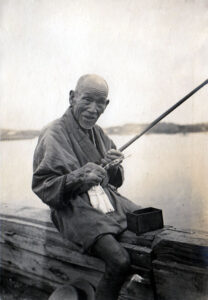
This quoted segment offers yet a third definition option for truth. Confucius, a celebrated scholar-consultant is at a loss for words in a conversation with the old fisherman. Confucius is a well regarded theoretician regarding family relations and by extension, the proper relationship between a ruler and his advisors, to the bureaucracy, then expanding all the way to the common people. The anonymous old fisherman, who is a chance on-the-road encounter demonstrates himself to be more than a match for Confucius in this discussion.
On this account, a taoist notion of “truth” is dynamic. Truth is the unfiltered response of the body to words or actions or circumstances. “Truth” is not contrived role-play. Truth is personal. Truth is effortless, involuntary. Truth is persuasive.
What do you think?





One thought on “Truth”
As we have discussed many times, my belief is that the definition of the word “truth” is ill conceived. That most people seem to feel that truth is rock solid. That once you find truth there is no other way to view the world. Yet for me, truth means something different to every individual on earth. The meaning is both malleable and transitory since truth on one day will mean something different tomorrow. Truth (or what we think is truth) is as porous as water through a sieve.
And so those of us who understand this volatility we seek empirical data by which to better understand our environment. And the word truth can live in the imaginations of those who will continue to believe they have a lock on the true nature of life. Ultimately this leaves me feeling very sad, for how can we ever agree on how to fix the multitude of problems that face us every day?